Potato farmers must keep these things in mind while selecting seeds

Potato farmers must keep these things in mind while selecting seeds
  • For potato cultivation, farmers should select only high-yielding, pest-free, healthy and pure seeds. The use of certified seeds is very important for good yield.

  • It is also advisable to replace the seed stock every 3-4 years as failure to do so may spoil the varieties and result in low yields.

  • Healthy, medium or small-sized sprouted tubers should be selected for planting.

  • For ideal planting, the tuber size should be about 2.5 cm in diameter and 25-40 grams in weight.

  • Larger tubers can be harvested. Each piece should have 2-3 long eye-shaped pieces.

  • The seed should be from the previous year’s crop, the seed rate being about 1.5 to 2.5 tonnes per hectare.

  • The harvested tubers can be used for the main crop. Care should be taken when cutting tubers.

  • Each piece should have two to three eyes and weigh at least 25 grams. If any diseased tuber is seen, it should be removed.

Keep reading Gramophone articles daily for important news related to your life. If you liked today’s information, do not forget to share.

Share

Identify foot and mouth disease in animals by its symptoms

Identify foot and mouth disease in animals by its symptoms

This disease is caused to animals by a very small virus or virus that is not visible to the naked eye. Which is called the foot and mouth virus.

Reasons for the spread of the disease:

This disease mainly spreads through direct contact with infected animal secretions and excretory fluids such as saliva, dung, milk, grain, water, grass, utensils, hands of the milker and through the air. Viruses are in large numbers in this discharge and enter the body of a healthy animal through the mouth and nose.

Symptoms of the disease:

When this disease occurs, the animal has a high fever (104-106*F). Small blisters are formed in the mouth of the sick animal mainly on the top of the tongue, inside the lips, on the gums as well as in the space between the hooves. Then gradually these blisters coalesce to form bigger blisters. When the time comes, these blisters burst and there are wounds in them. Due to blisters in the mouth, animals stop chewing and stop eating and drinking, saliva keeps falling continuously from the mouth, as well as the sound like chap-chap is also heard while running the mouth. Milk production in milch animals is reduced by up to 80%. Animals start getting weak. Even after getting healthy, the affected animal keeps on panting for months and many times for life.

Keep reading Gramophone articles daily for important news related to your life. If you liked today’s information, do not forget to share.

Share

Importance of Sulfur in crops

Importance of Sulfur in crops
  • Sulfur is helpful in increasing the percentage of protein in crops, as well as sulfur contributes to the production of chlorophyll, which causes the leaf to remain green and produce food for plants.

  • Sulfur increases the efficiency and availability of nitrogen.

  • In pulse crops, using sulfur, is helpful in making more nodules in the roots of the plants, due to which the bacteria called Rhizobium present in the roots of the plants, take the nitrogen present in the atmosphere, and make it available to the crops. 

  • Enhances the quality of tobacco, vegetables and fodder crops.

  • The important use of sulfur is to increase the amount of protein and oil in oilseeds. 

  • Sulfur increases the amount of starch in potatoes.

  • Sulfur is called soil reformer because it lowers the pH of the soil.

For beneficial information related to agriculture and farmers, definitely read the articles on Gramophone daily. Don’t forget to share this article with your friends using the share button below.

Share

How to control termites in Rabi crops

  • Termite is a polyphagous insect, which means that it attacks on all crops, termites cause a lot of damage to the roots of the plants. They also eat the stem when the infestation is high.

  • Crops like potato,  tomato, chilli, brinjal, cauliflower, cabbage, mustard, radish, wheat etc. are the major crops that are infected by termite.

  • Timely management is necessary to control this pest.

  • Seeds should be sown after seed treatment with insecticide.

  • Must treat soil with biological insecticide METARHIZIUM ANISOPLIAE

  • Raw cow dung manure should not be used because raw dung is the staple food of this insect.

  • To control termites, CHLORPYRIPHOS 20 % EC @ 1 liter should be mixed with 4 kg of sand and applied to the field at the time of sowing.

Keep reading Gramophone articles daily for important news related to your life. If you liked today’s information, do not forget to share.


Share

Symptoms and control of yellow vein mosaic virus in okra crop

Symptoms and control of yellow vein mosaic virus in okra crop

It is a viral disease which spreads further due to the sucking insect present in the crop.

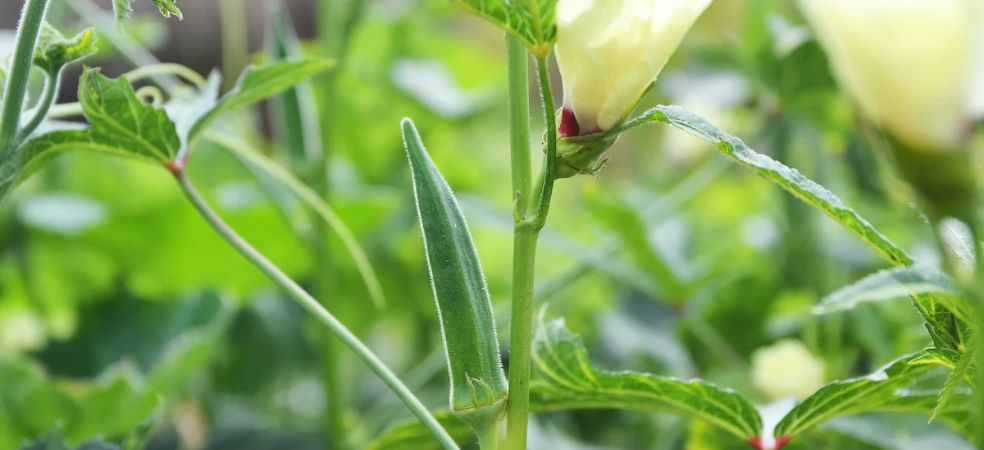
Symptoms: In the early stages of the disease, the veins of affected plant leaves turn yellow, but as the disease incidence increases or in the later stages of the disease, this yellowness spreads over the entire leaf and as a result, the leaves start to curl and shrink, and the growth of the plant stops. The fruits of the affected plant become pale yellow, deformed and hard.

Control: This disease is mainly spread by white fly, for its control spraying of Novaceta (Acetamiprid 20% SP) @ 30 gm per acre or Pager (Diphenthiuron 50% WP) @ 240 gm/acre in 150 to 200 litres of water.

Keep reading Gramophone articles daily for important news related to your life. If you liked today’s information, do not forget to share.

Share

There are many benefits of soil treatment in potato crop

There are many benefits of soil treatment in potato crop
  • Soil treatment before sowing in potato crops is very important.

  • Soil fertility and nutrient management are very important for disease-free crops and good yields. These have a direct impact on the quality of the crop.

  • In the Rabi season, due to excessive moisture in the soil before the sowing of potatoes, there is a high incidence of fungal diseases and pests.

  • To prevent fungal diseases and pests, soil treatment is done with fungicides and insecticides.

  • By treating the soil with fungicides and insecticides, diseases like tuber rot do not occur in the potato crop.

  • Soil treatment also helps in preventing potato rot disease.

  • Soil treatment is also very important to overcome the deficiency of nutrients in the soil. Its main nutrients are used.

  • Soil treatment improves the structure of the soil and production also increases to a great extent.

For beneficial information related to agriculture and farmers, read the articles of Gramophone daily. Don’t forget to share this article with your friends using the share button below.

Share

Importance of consortia PK bacteria

Importance of consortia PK bacteria
  • It contains a mixture of two types of bacteria i.e. phosphorus solubilizing (PSB) and potash mobilizing bacteria (KMB).

  • It helps in the supply of potash and phosphorus which are two major elements of soil and crop, it is used more in pulses.

  • This bacteria converts insoluble potash and phosphorus that is found in the soil into soluble form to provide plants.

  • It causes the plant to get the necessary elements in time, and the crop grows well,

  • Crop production increases as well as the availability of nutrients in the soil. 

For beneficial information related to agriculture and farmers, read the articles of Gramophone daily. Don’t forget to share this article with your friends using the share button below.

Share

Weed Management in Potato Crop 1-5 Days of Sowing

Weed Management in Potato Crop 1-5 Days of Sowing
  • The potato crop is the main Rabi crop, due to excessive moisture in the soil left after the rainy season, weeds start growing in large numbers after sowing of the potato crop.

  • All types of weeds can be controlled by using timely and proper weedicide.

  • Chemical method: – In this method weed control is done using chemicals. Weed can be controlled very well by using these chemicals periodically.

  • 1-3 days after sowing: – PENDIMETHALIN 38.7% CS @ 700 ml/acre should be sprayed 1-3 days after sowing for chemical control of weeds.

  • This way spraying can control the weeds that grow in the early stage of sowing.

  • Second spraying after sowing: – METRIBUZIN 70% WP @ 100 gm per acre 3-4 days after sowing or 5 cm of the potato plant. 

  • It is very important to have sufficient moisture at the time of spraying the weedicide.

For more such important information related to the agriculture sector, keep reading the articles of Gramophone daily. If you liked today’s information, then do not forget to share.

Share

Importance of cow dung in agriculture

Importance of cow dung in agriculture
  • FYM improves the physical structure of the soil and increases air circulation in the soil.

  • Improves soil water level by increasing the water holding capacity of the soil.

  • The roots of plants grow well, plants uptake more of the nutrients.

  • Increases the amount of organic matter in the soil and the alkali exchange capacity of the soil. 

  • The number of beneficial bacteria in the soil increases. Due to this, the yield of the crop is very good.

  • FYM helps in converting complex compounds into simple compounds.

  • Prevents soil erosion by increasing the cohesion of soil particles.

  • Nitrogen 0.5%, Phosphorus 0.25% and Potash 0.5% are found in this.

For beneficial information related to agriculture and farmers, read the articles of Gramophone daily. Don’t forget to share this article with your friends using the share button below.

Share

Soil treatment and its benefits with the biological insecticide METARHIZIUM ANISOPLIAE

Soil treatment and its benefits with the biological insecticide METARHIZIUM ANISOPLIAE
  • Metarhizium anisopliae is a very useful biological control.

  • It is used as an insecticide against about 300 species of white grubs, termites, grasshoppers, planthoppers, aphids, bugs, and beetles, etc.

  • Take 1 kg of Metarhizium anisopliae/acre and mix it with 50-100 kg of well-decomposed FYM and broadcast it in an open field. 

  • Spores of this fungus germinate on the body of the insect’s insufficient moisture.

  • This fungus eats the body of the host insect. 

  • It can also be used as spraying in standing crops.

  • It is very important to have the necessary moisture in the field before its use.

For beneficial information related to agriculture and farmers, read the articles of Gramophone daily. Don’t forget to share this article with your friends using the share button below.

Share