
Management of rust disease in wheat

Management of rust disease in wheat

  • This disease is mainly seen in wheat crops. It is caused by a fungus called Puccinia recondita tritici which is also known as brown rust, yellow rust or black rust. 

  • The hallmark of this disease is that in the initial stage, the symptoms appear on the upper surface of the leaves, which later become denser and spread over the entire leaf. 

  • The sick leaves dry up quickly, due to which the process of photosynthesis also decreases and the grain becomes lighter. With increasing temperature, the colour of these spots turns black on the lower surface of the leaves.

  • For chemical control of this disease, spray Hexaconazole 5% SC @ 400 ml or Propiconazole 25% EC @ 200 ml or Tebuconazole 25.9% EC @ 200 ml/acre.

  • For biological control, spray Trichoderma viride @ 500 gm /acre or Pseudomonas fluorescens @ 250 gm/acre. 

With the sowing of the crop, connect your farm with the My Farm section of Gramophone app and keep on getting the exact advice and solutions related to smart agriculture throughout the crop cycle. Share this article with your friends with the share button below.


Share

Some areas will rain and some areas will remain dry, see weather forecast

Weather Forecast

In the month of February, three consecutive western disturbances brought rain and unseasonal rains in many states, causing heavy snowfall on the mountains. Now there will be a break over these Western Disturbances and there will be no very strong Western Disturbance for the next 1 week. The weather of North West, Central and East India will remain dry. Rain is possible over North as well as Tamil Nadu and Kerala.

Source: Skymet Weather

Please visit the Gramophone app daily for information on weather forecasts. Share this article with your friends by clicking the share button below.

Share

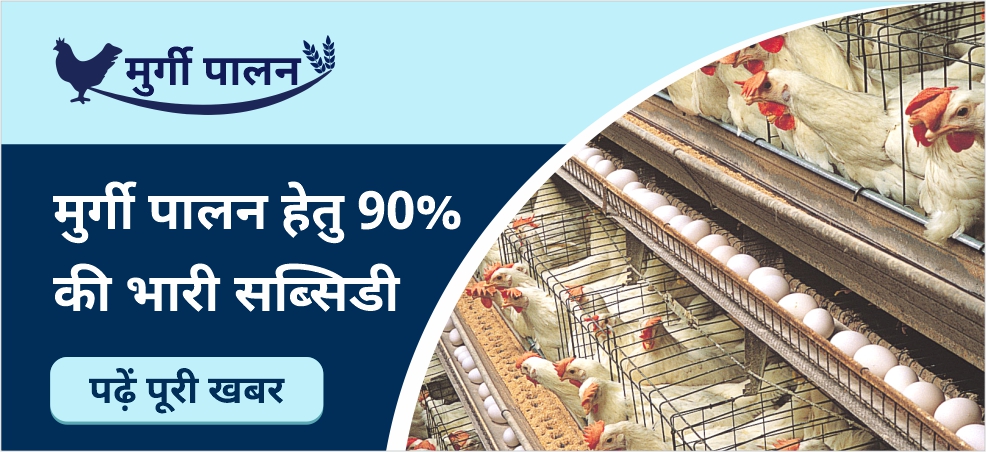
Do Poultry Farming at a huge subsidy of 90%, start business from your home

Do Poultry Farming at a huge subsidy of 90%

Many farmers also earn good income through animal husbandry or poultry farming etc. The government also motivates the farmers to move forward in these areas. The government is also promoting animal husbandry, poultry etc. through many schemes.

In this episode, it has been decided by the Chhattisgarh government to give a maximum subsidy of 90% to start the business of poultry farming. This subsidy will be given under the backyard poultry, duck or quail rearing scheme. Those wishing to take advantage of the scheme can start this business in their home or in the garden.

In this scheme, there is a provision of 75% of the cost to the general category and 90% of the subsidy for SC and ST. This scheme is applicable in every district of Chhattisgarh and to take advantage of this, the beneficiary will have to apply to his nearest veterinary institution.

Source: Kisan Samadhan

Keep reading the articles of Gramophone app daily for such new and important information about the agriculture sector. Share this article with your friends by clicking the share button below.

Share

2 lakh challan will be deducted, know the new traffic rules and be careful

2 lakh challan will be deducted

Under the new Motor Vehicle Act, you can have to pay a fine of more than Rs 2 lakh for breaking the traffic rule. Let us know how much fine can be given for breaking which traffic rule.

  • 10000 rupees for violation of permit

  • Rs.4000 for non-insured

  • Rs 10000 for non-pollution certificate

  • 20000 rupees for carrying construction material without cover

  • 1000 rupees for not wearing a seat belt

  • Overloading currency will be Rs 20000

  • The higher the tonnage, the fine will be 2000 times

Source: Samacharnama

For more such important news related to your life and all the information related to agriculture, keep reading the articles on Gramophone daily. Share this article with your friends via the share button.

Share

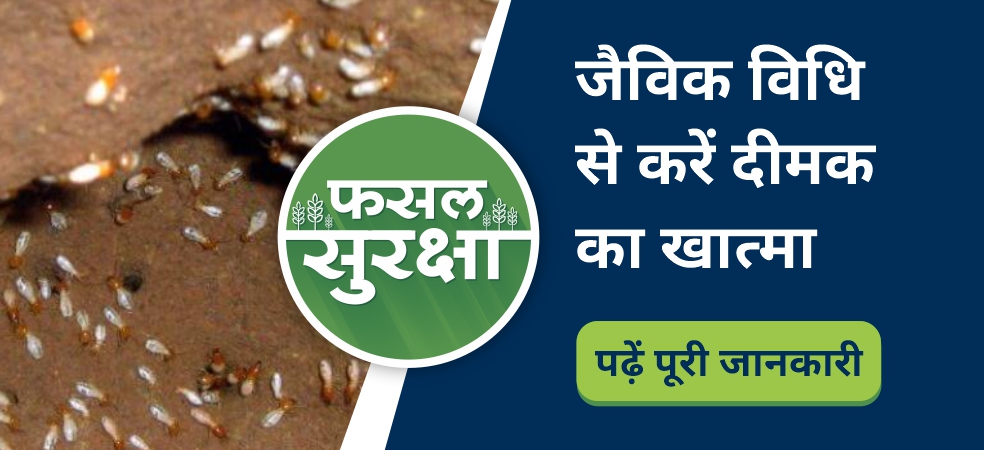
Biological control of termites

Biological control of termites
  • Crops like tomato, chilli, brinjal, cauliflower, cabbage, mustard, radish, wheat etc. are the major crops affected by termites. It damages the roots of plants by staying in the soil. 

  • Proper management is necessary to control this pest.

  • Seeds should be sown after seed treatment.

  • Must treat soil with insecticide Metarhizium anisopliae.

  • Raw dung manure should not be used, as raw dung is the staple food of this insect. Therefore, use cow dung after proper composting.

  • For termite control in standing crops, apply neem oil at the rate of 1-1.5 litres per acre with irrigation water, Or mix with 15 – 20 kg of sand and irrigate after broadcasting. 

  • In termite affected areas, apply 200 kg of castor cake per acre at the time of the last ploughing

Add your farm with the My Farm section of Gramophone app and keep on getting the exact advice and solutions related to smart agriculture throughout the crop cycle. Share this article with your friends with the share button below.
Share

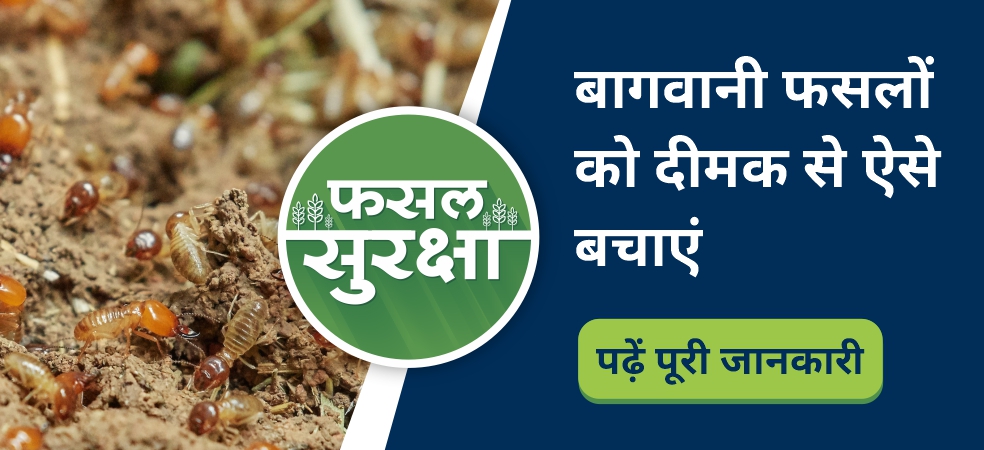
Control the outbreak of termites in horticultural crops like this

Control the outbreak of termites in horticultural crops like this
  • The problem of termites is seen in horticultural crops like pomegranate, mango, guava, Jamun, lemon, orange, papaya, amla etc.

  • Insects tunnel into the ground and feed plant roots. When the outbreak is high, they also eat the stem and form a soil-like structure.

  • In summer, deep ploughing in the soil destroys termites and always use good rotten manure (FYM).

  • Beauveria bassiana [Bave curb] 1 kg should be mixed with 25 kg FYM before sowing. 

  • Fill the termite mound with kerosene so that the termite queen as well as other members will die.

  • Use chlorpyrifos 50 + Cypermethrin 5 % EC [ Lethal super 550 ] @ 250 ml per 10 litres of water in the holes made on the stems by the termites and add the same medicine near the roots of the tree in 50 ml per 10 litres of water.

Share